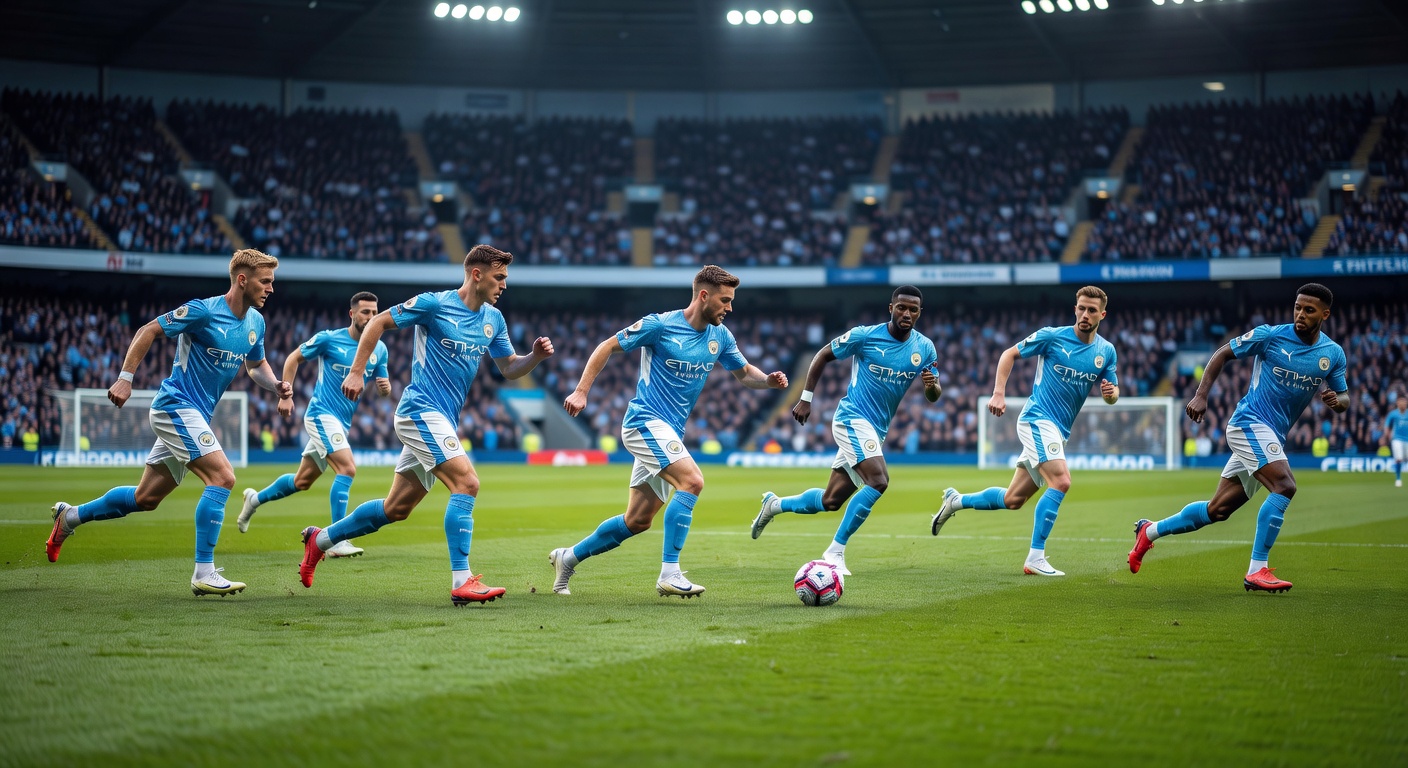
Pep Guardiola's Manchester City have become the standard-bearers for modern tactical football. Their positional play system — rooted in the principles of Johan Cruyff and refined through decades of Guardiola's obsessive attention to detail — has become the most imitated, analyzed, and debated tactical approach in world football. But what makes it so effective, and why has no team been able to fully replicate its success?
The Foundation: Positional Play Principles
At its core, Guardiola's system is built on the concept of creating numerical and positional superiority in every phase of play. The team is organized into specific zones on the pitch, and players are given freedom to rotate within a structured framework. The key principles include:
🎯 Third-Man Combinations
Rather than simple one-two passing, City use a third player to create unexpected passing angles. Player A passes to Player B, who lays off to Player C — who was already moving into space before the initial pass was made. This requires extraordinary spatial awareness and anticipation from every player.
📐 Half-Space Exploitation
The zones between the center of the pitch and the wide areas — the half-spaces — are where City do their most dangerous work. Players like Foden, Bernardo Silva, and De Bruyne are constantly occupying these channels, dragging defenders out of position and creating passing lanes into the penalty area.
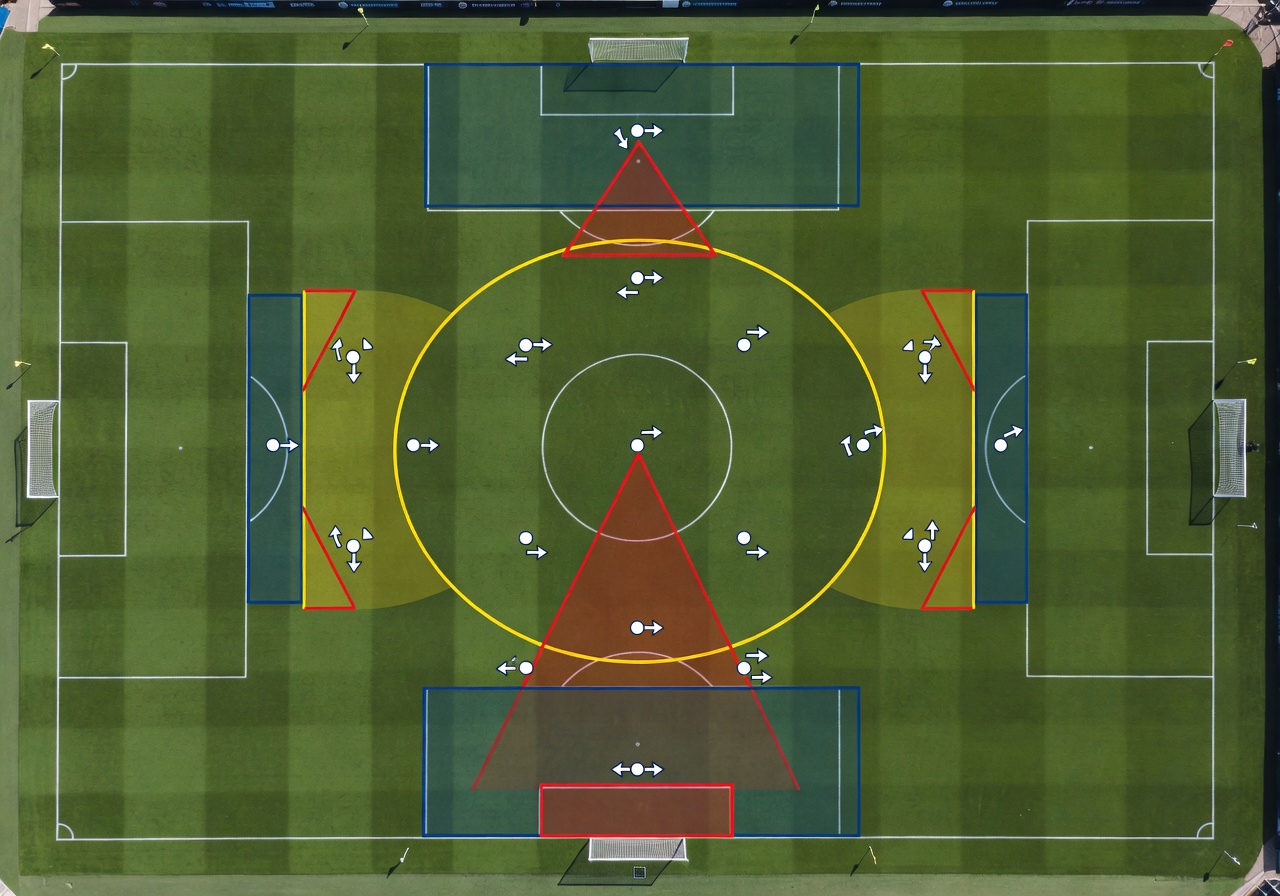 City's positional structure creates numerical advantages across the pitch
The Inverted Full-Back Revolution
Perhaps Guardiola's most influential tactical innovation at City has been the use of inverted full-backs. Rather than overlapping wide to provide width, City's full-backs — particularly João Cancelo initially, and now Kyle Walker and others — tuck inside to occupy central midfield positions when the team has possession.
This creates a 3-2-5 attacking shape from a nominal 4-3-3 defensive structure. The three center-backs provide a solid base, the two holding midfielders (one of whom is an inverted full-back) control the tempo, and the five attacking players create overloads across the front line. This shape makes it virtually impossible for opponents to defend traditionally, as the numerical advantages in central areas force defenders to make difficult decisions about who to mark and which spaces to protect.
Team Comparison: City vs Their Closest Rivals
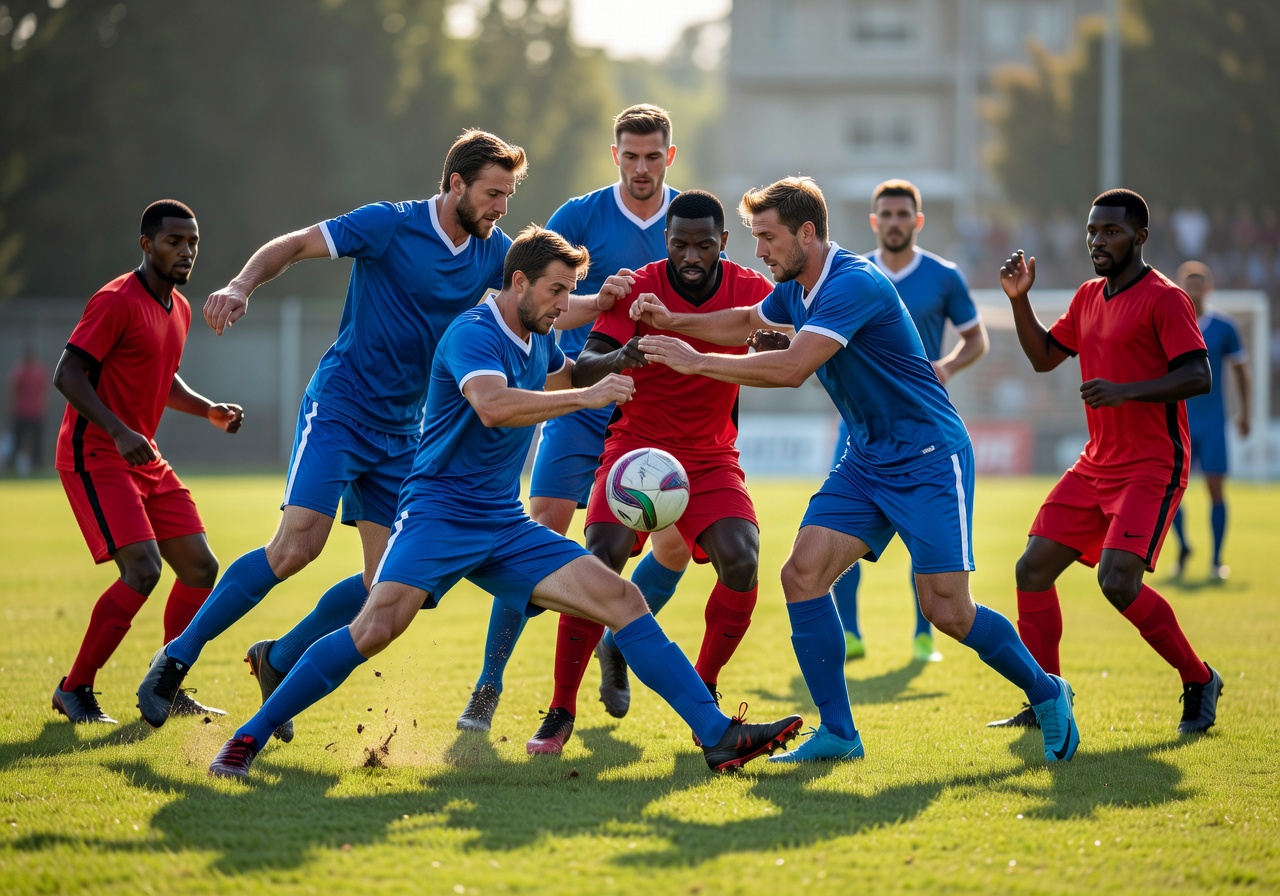 City's coordinated pressing sequences force turnovers in dangerous areas
Key Player Focus: Rodri — The System's Anchor
No player is more critical to Guardiola's system than Rodri. The Spanish midfielder's Ballon d'Or recognition was a validation of the essential role that holding midfielders play in modern football. Rodri's contribution extends far beyond defensive work — he is the metronome who sets the tempo, the decision-maker who chooses when to circulate possession and when to progress the ball vertically, and the press-resistant pivot who allows City to play out from the back under intense pressure.
Statistical analysis reveals that City's win rate drops by approximately 15% without Rodri in the lineup, and their progressive passing output decreases by nearly 20%. His ability to make the right decision under pressure — whether that's a short pass to maintain possession, a line-breaking through ball, or a switch of play to exploit space on the opposite flank — is what makes City's system function at its highest level.
Defensive Vulnerabilities: How to Beat City
Despite their tactical sophistication, City are not invincible. Their commitment to high possession and advanced positioning creates inherent vulnerabilities that have been exploited by well-organized opponents. The primary weakness is in defensive transitions — the moments immediately after losing possession when players are caught in advanced, narrow positions.
🚀 Counter-Attack Speed
Teams with rapid, direct counter-attacking players — like Real Madrid's Vinícius Jr. or Liverpool's Salah — can exploit the space behind City's high defensive line when turnovers occur.
💪 Physical Pressing
Aggressive, physical pressing in midfield can disrupt City's build-up rhythm. Teams like Atlético Madrid have shown that man-marking Rodri and pressing the center-backs aggressively can force City into errors.
Final Insight: The Legacy of Guardiola's System
Manchester City's positional play system has fundamentally changed how football is coached, analyzed, and understood. From the youth academies of Barcelona to the training grounds of the Bundesliga, Guardiola's principles have influenced an entire generation of managers and players. The system demands intelligence, technical excellence, and selfless team play — qualities that define the most successful football teams in history.
However, the system's ultimate success depends on the quality of players executing it. Guardiola's genius lies not just in the tactical framework, but in his ability to identify and develop players who can operate within its demanding requirements. As City continue to evolve under his leadership, the football world watches, learns, and tries — often unsuccessfully — to replicate the most sophisticated tactical system of the modern era.